Train your
musical ear
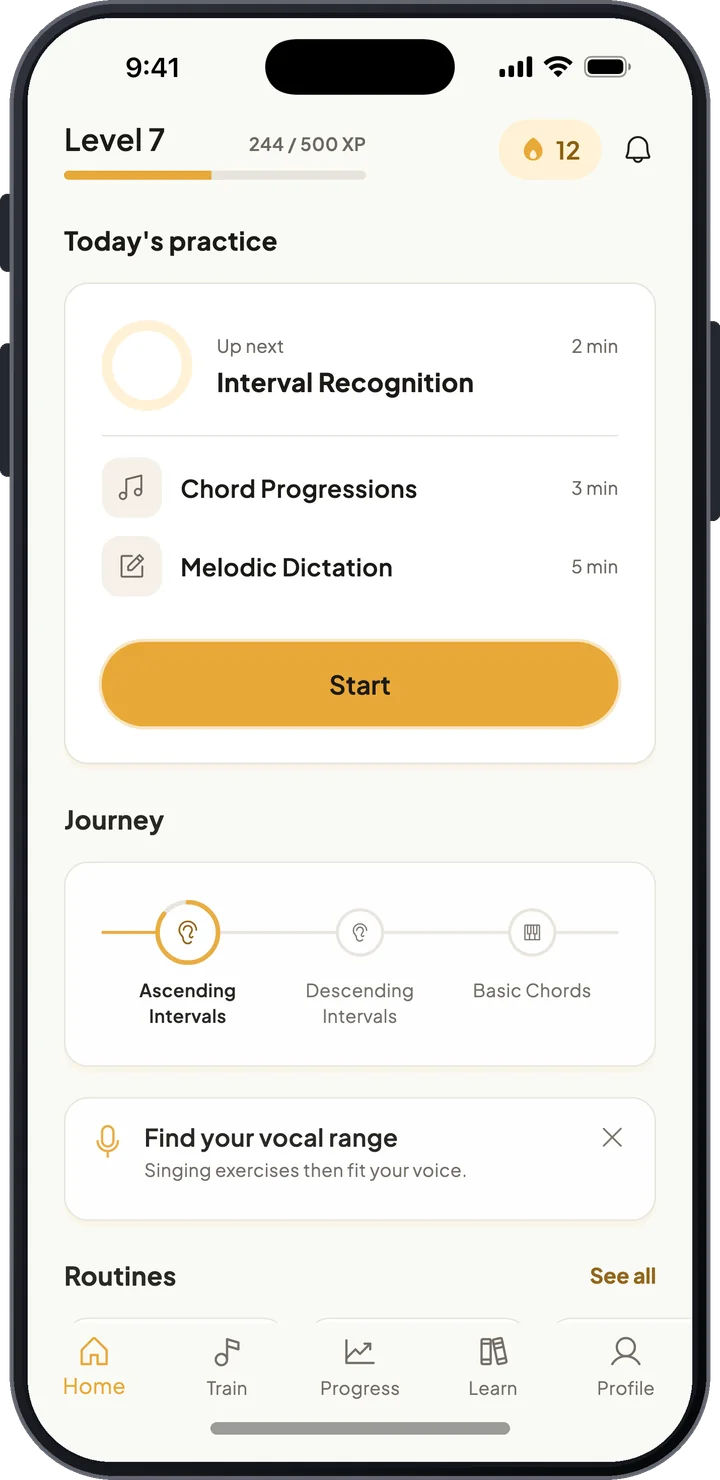
Practice intervals, chords, scales and melodies a few minutes a day. ToneSeed keeps track of what you get wrong and brings it back until it sticks.


What you get to train your ear
The app works for a first-week beginner and for a music student preparing for exams. The exercises get harder only when you are ready for it.
15 exercise types
Recognition, singing and dictation: intervals, chords, scales, cadences, progressions, solfege, melodic echo, vocal warmup and more.
Adaptive difficulty
The app tracks your accuracy on every interval, chord and scale, and adds new material only when the current one is solid.
Spaced repetition
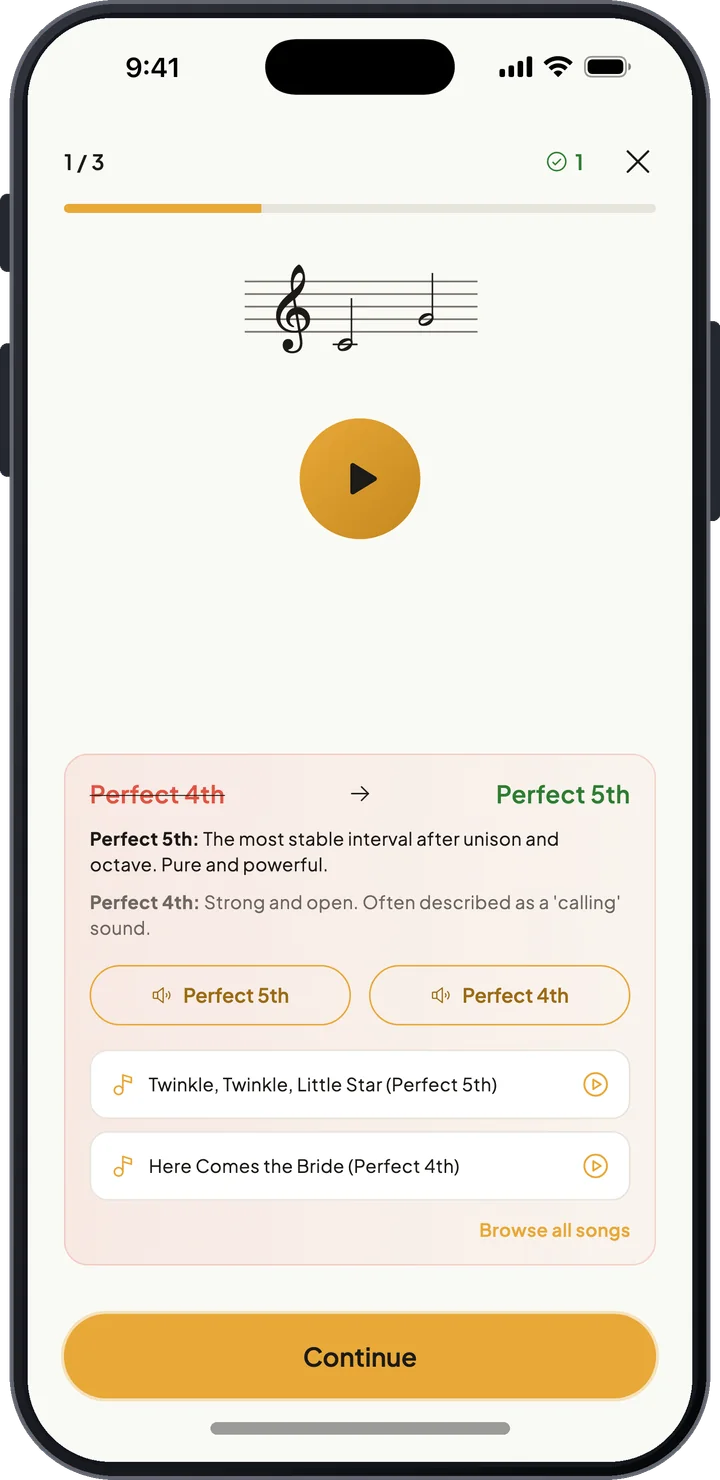
Things you have learned come back for review just before you would forget them, so they stay learned.
Progress you can read
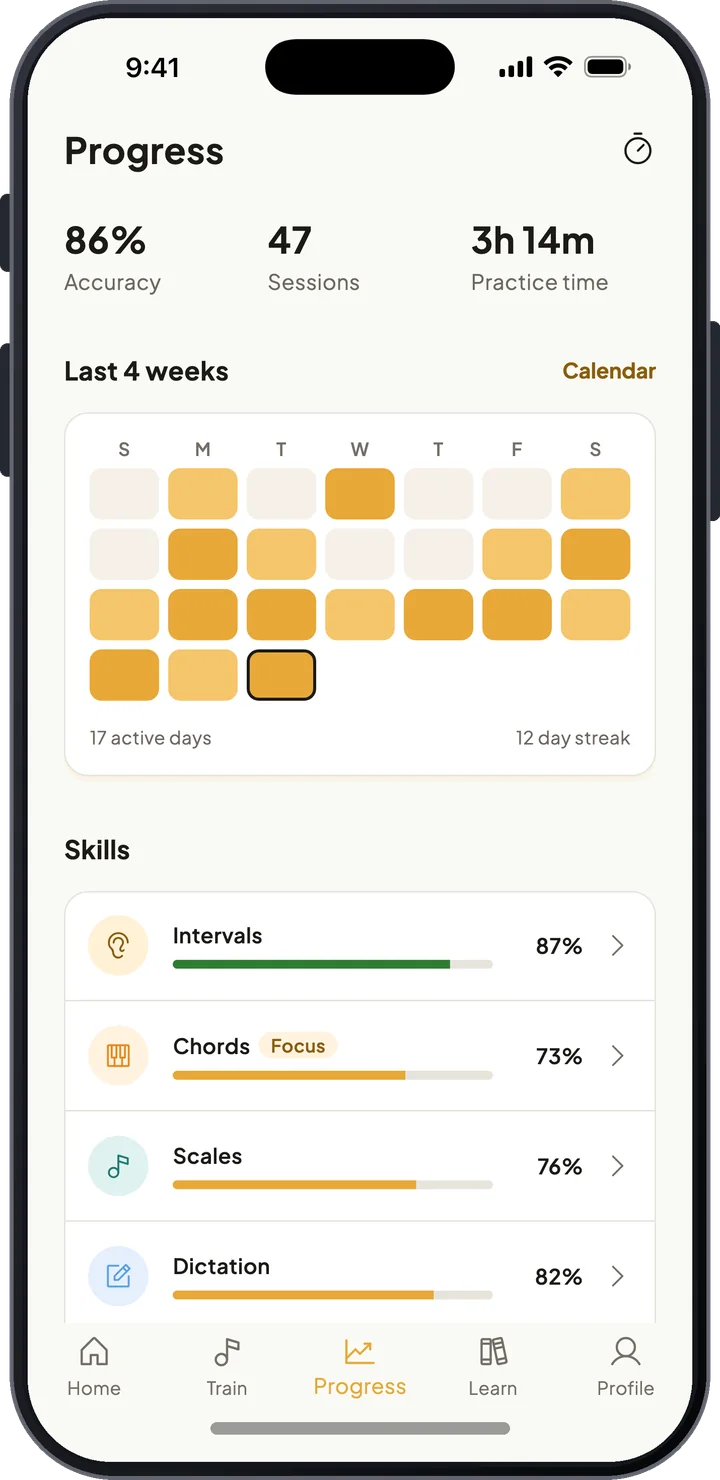
Accuracy per interval, the pairs of sounds you mix up, per-skill scores and a practice calendar. You see exactly what to work on next.
Streaks and achievements
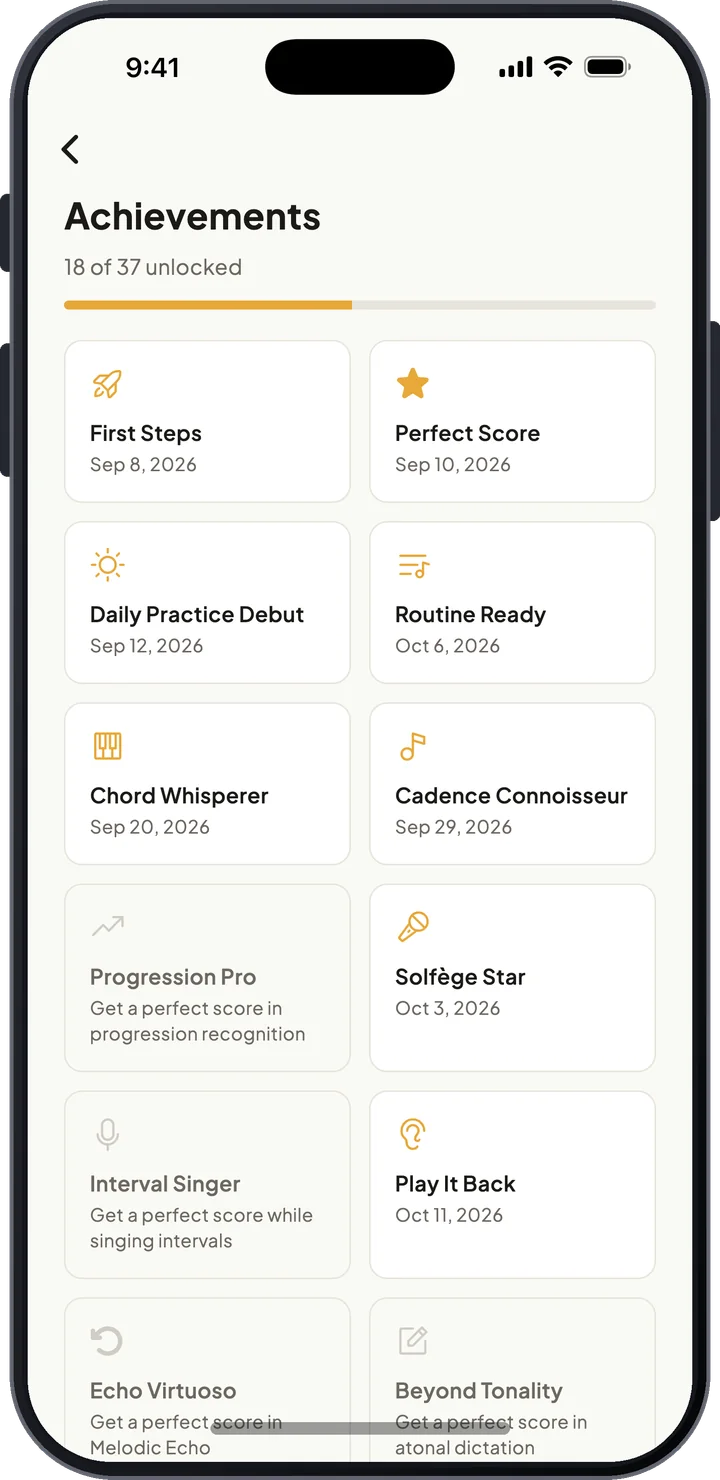
37 achievements, XP levels and daily streaks. Not the reason to practice, but they help on the days you don't feel like it.
Sing and get feedback
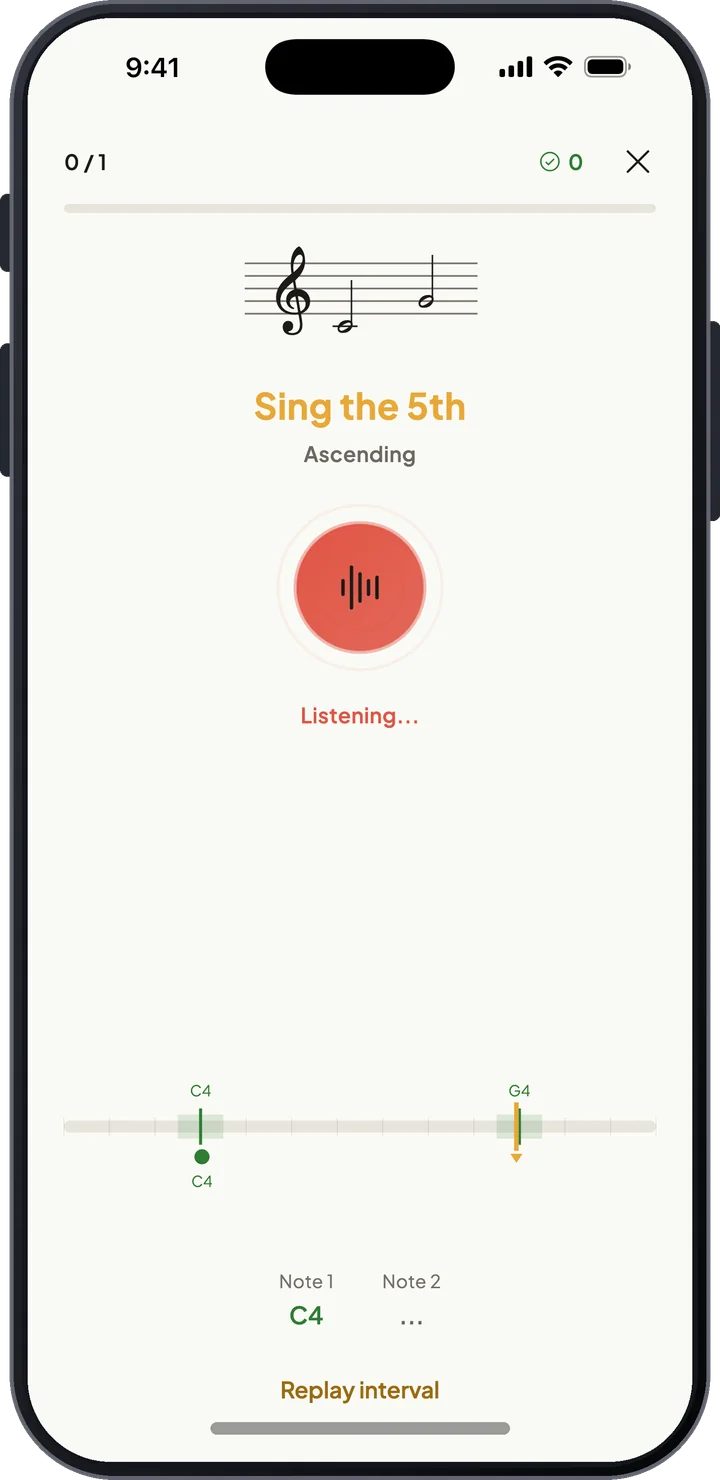
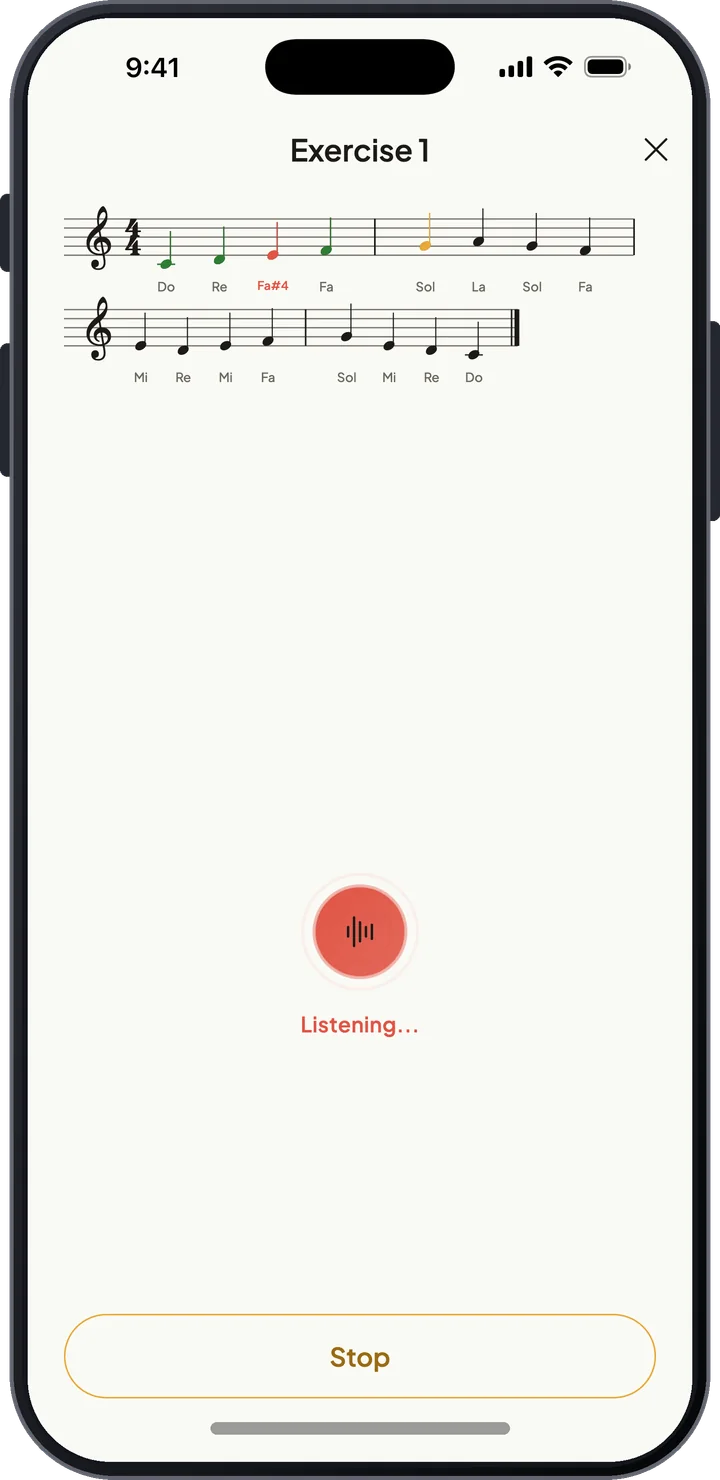
Sing intervals and melodies into the microphone. Live pitch detection shows whether you are on the note, sharp or flat.
Every part of ear training
You start by telling a major third from a perfect fourth, and you can end up transcribing melodies with rhythm. Each step on the way has its own exercise type.
- 13 intervals, ascending, descending and harmonic
- 16 chord types, from triads to 13th chords, with inversions
- 12 scales, including the church modes
- 26 chord progressions to recognize by ear
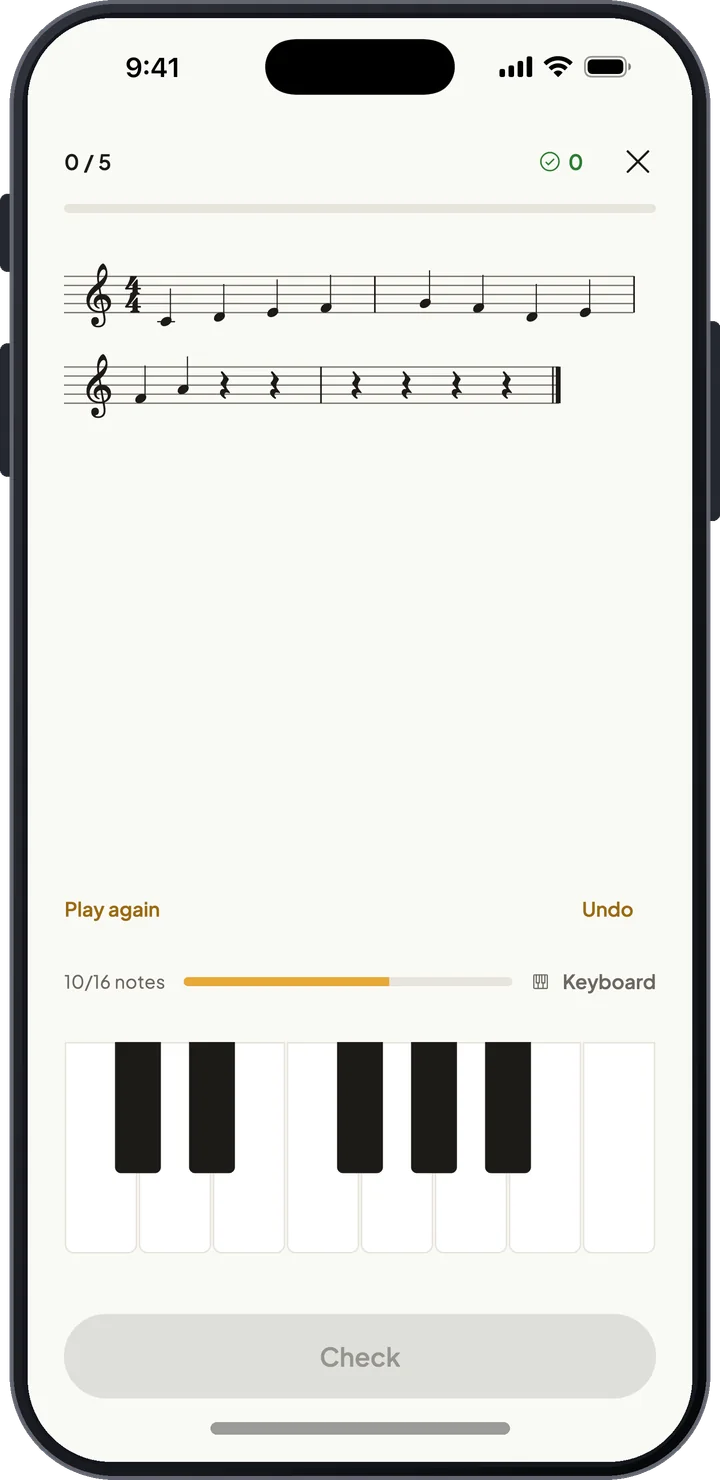
- Melodic and rhythmic dictation on a real staff
- Solfege sight-singing graded by the microphone
- Interval singing - hear the first note and sing the second one
- Chord entrance - hear a chord and sing one of its tones
- Vocal warmups to prepare your voice before singing
- Cadences: authentic, plagal, half and deceptive
Practice what you get wrong
ToneSeed records every answer. If you keep mixing up minor and major sixths, your next practice will have more of them, and less of what you already know.
- A daily practice plan built from your weak spots
- New material unlocks as you master the previous one
- Confusion tracking shows which sounds you mix up
- Per-skill scores for intervals, chords, scales and dictation
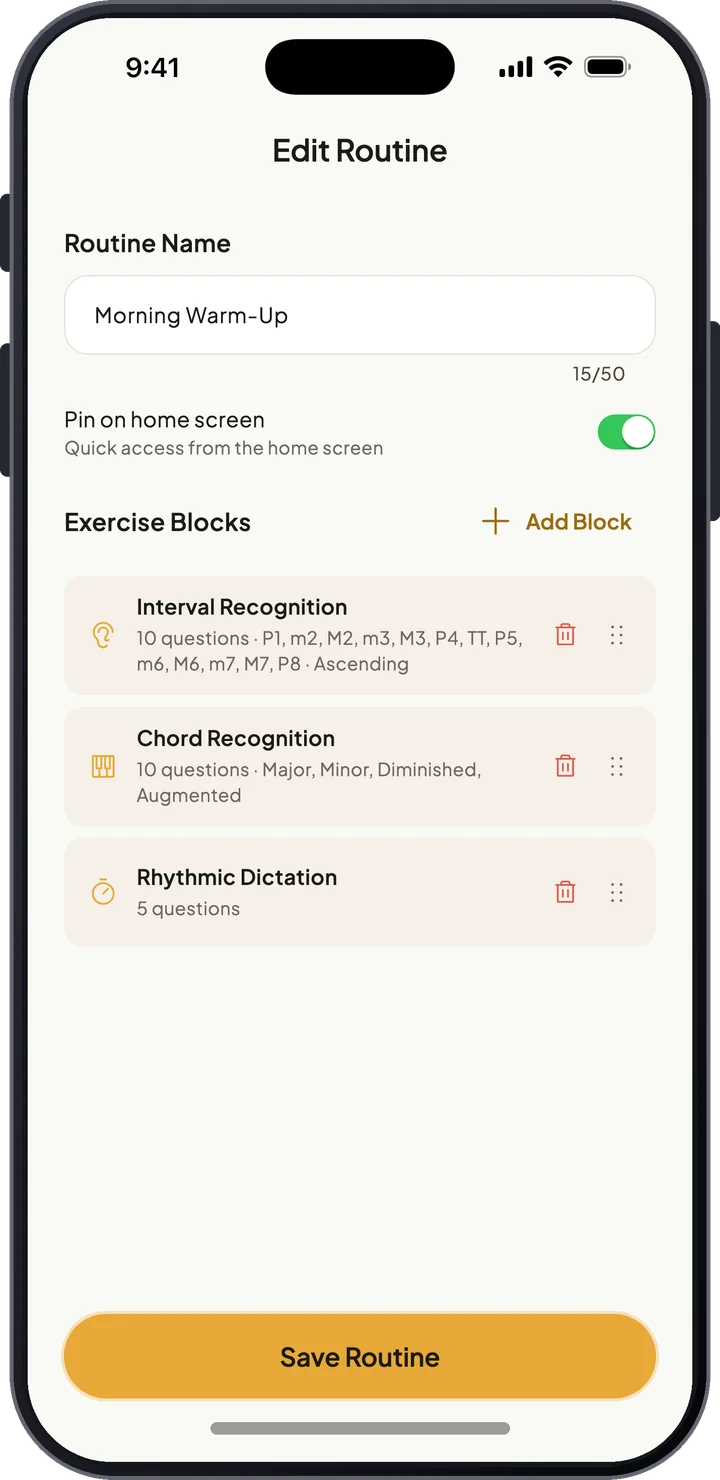
- Your own routines, if you prefer to choose the exercises yourself
Keep the habit
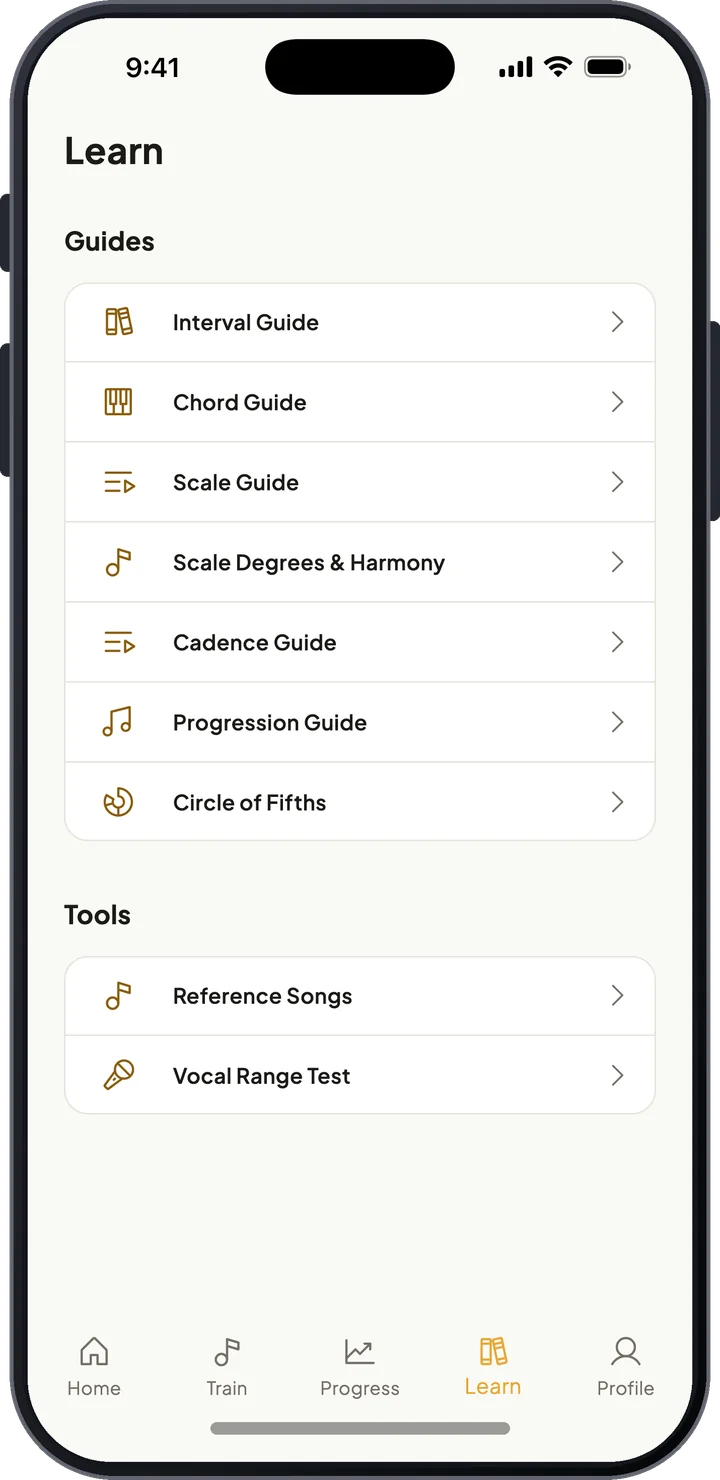
Ear training works best in short, regular sessions, and coming back every day is the hardest part. Streaks, levels and achievements help with that, and the Learn tab explains the theory behind what you hear.
- 37 achievements, from your first session to long-term milestones
- Daily streaks and a practice calendar
- XP and levels
- Guides for intervals, chords, scales, cadences and progressions
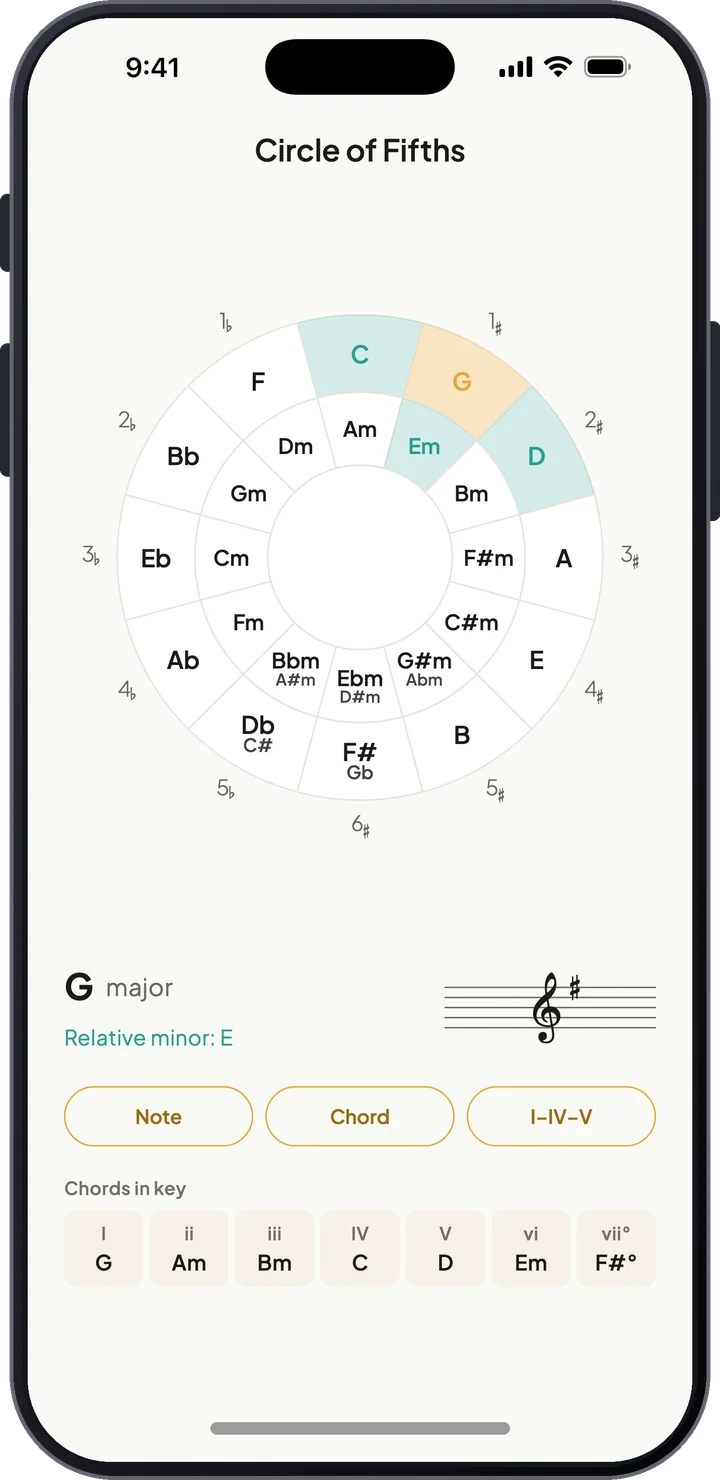
- A circle of fifths you can play
- Reference songs that help you remember each interval
15 exercise types to challenge your ear
Learning your first intervals or working on harmonic dictation for an exam - there is an exercise for the level you are at, and one for the level after that.
Interval Recognition
Identify 13 intervals, ascending, descending and harmonic
Chord Recognition
Recognize 16 chord types and their inversions, with an A/B comparison mode
Scale Recognition
Identify 12 scales, from major and minor to the church modes
Melodic Dictation
Write down melodies note by note on a staff
Rhythm Dictation
Write down rhythms, with new note values unlocking in 8 steps
Melodic-Rhythmic Dictation
Pitch and rhythm together, the hardest dictation in the app
Cadence Identification
Recognize authentic, plagal, half and deceptive cadences
Solfege Sight-Singing
Sing from notation, with live pitch feedback
Interval Singing
Hear the first note, then sing the second one, in your vocal range
Chord Entrance
Hear a chord, then sing one of its tones in any octave
Vocal Warmup
Lip trills, hums, sirens and sustained tones to get your voice ready
Atonal Dictation
Write down chromatic melodies with no key center, for advanced ears
Chord Progressions
Recognize 26 common chord progressions by ear
Interval Reproduction
Hear an interval and sing it back while the microphone checks your pitch
Melodic Echo
Hear a short melody and sing it back note for note
Learn the theory behind the sound
Knowing why a progression sounds the way it does makes it easier to hear. The guides and tools in the app connect the theory to the sound, one interval or key at a time.
- Circle of fifths with playable keys and progressions
- Reference songs for every interval
- Staff notation in the Bravura music font
- Piano sound for everyone; guitar, voice and violin with Pro
- Adjustable pitch ranges and difficulty

Start with five minutes a day
Download ToneSeed for free. Interval training stays free, and you can try the rest with a 7-day free trial.