
On air · the language guessing game

Hear it.
Spot it.
Name it.

Tells plays you a few seconds of a real voice or shows you one line of text. Name the language, then learn the tell that gives it away. 138 languages, a free daily broadcast, and after a week you'll spot them everywhere.

Coming soon to iPhone, iPad and Android

Tells mascot, a pink radio with an antenna, listening
languages
138languagesfrom Japanese to Cherokee
scripts
30scriptsLatin to Tifinagh
real voices
89real voicesnative speakers, not TTS
face-offs
26face-offslook-alike languages

How to play

Two ways to tune in: by ear and by eye

Ear round

Hear a voice. Turn the dial.

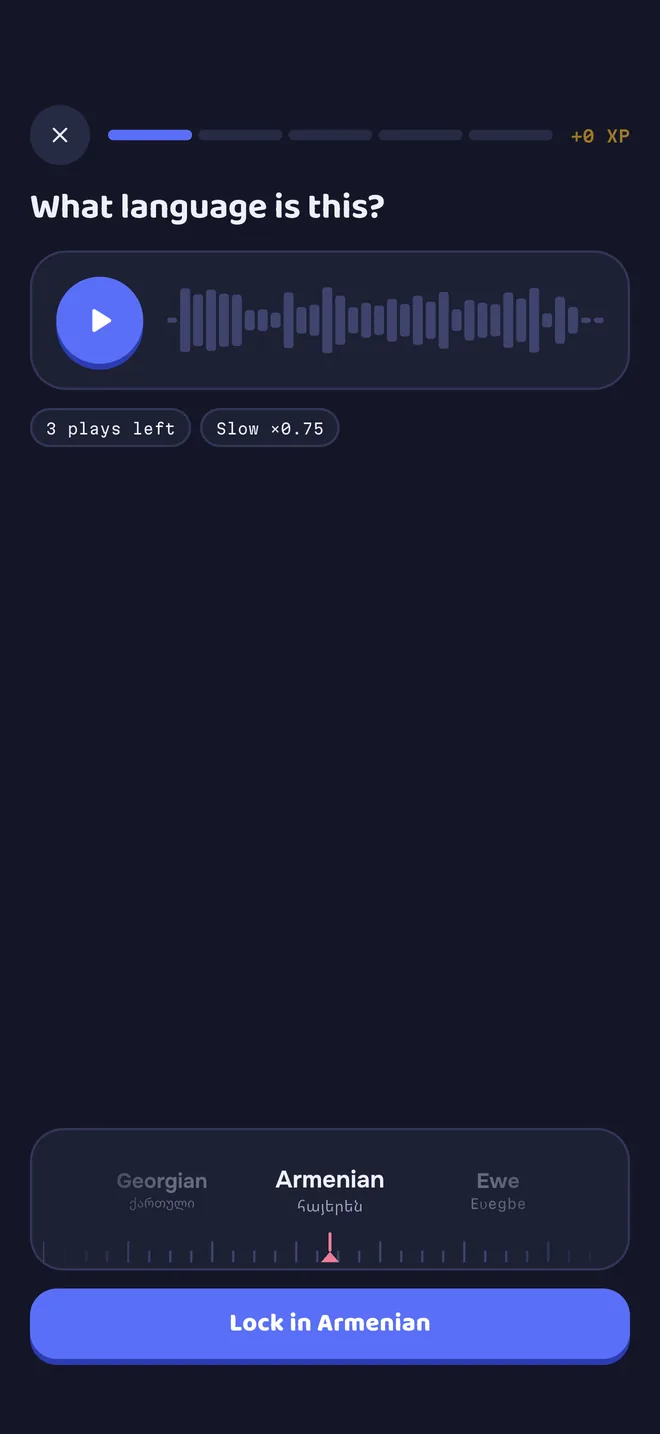
Play a few seconds of a native speaker. Real recordings, not text-to-speech. Slow it down if you need to, then tune the station dial to the language and lock in your answer.

Portuguese or Russian? Zulu or Xhosa? Your ears will surprise you.
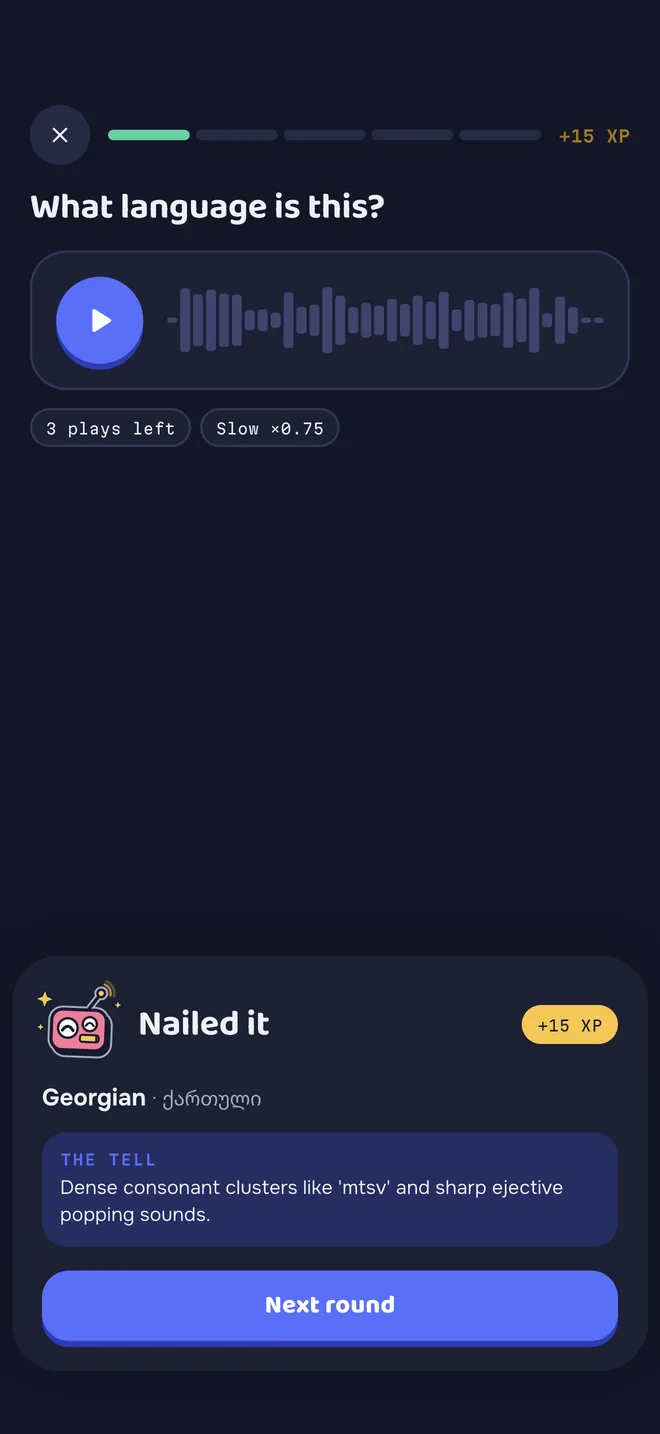
Ear round answered: Georgian, with the tell, dense consonant clusters and sharp ejective popping sounds

Eye round

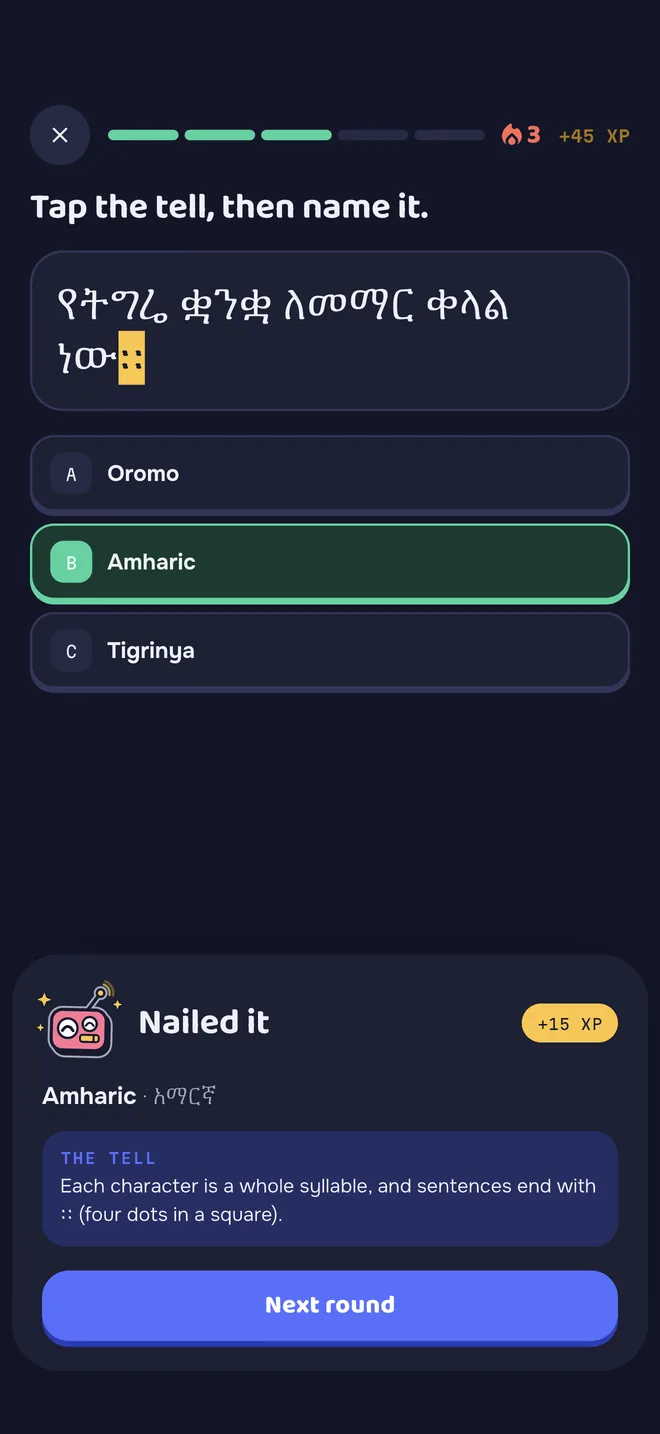
Tap the tell, then name it.

A single line in its own script: Georgian, Amharic, Khmer, Cyrillic, Devanagari and 25 more. Tap the letter that gives the language away, then pick the language.

Get it right or wrong, the tell is revealed and explained, so every round teaches you something.

Eye round: the tell ። is highlighted in an Amharic sentence, with the answer Amharic and the tell explained

Learn the tell

Every language has a giveaway

A letter, a sound, a pattern. Once you know it, you can't unsee it: on menus, street signs, packaging and film credits.

  • Polish

    The tell

    ł, plus ą and ę with a little tail. Clusters like szcz, rz and cz are everywhere.

  • Hungarian

    The tell

    ő and ű, the double acute accent, appear only in Hungarian.

  • Georgian

    The tell

    Round letters that hang above and below the line, and no capital letters.

  • Amharic

    The tell

    Each character is a whole syllable, and sentences end with four dots in a square.

  • Catalan

    The tell

    The middle dot in l·l, grave accents like à and è, and -ció where Spanish has -ción.

  • Turkish

    The tell

    Dotless ı next to dotted i, plus ğ and ş. Long words built from stacked suffixes.

  • Romanian

    The tell

    ș and ț with a comma below. A Romance language with Slavic-looking letters.

  • Maltese

    The tell

    ħ, ġ, ċ and ż, and the pair għ. A Semitic language written in Latin letters.

Ways to play

A new broadcast every day

Free

Daily broadcast

Five rounds, spoken and written, the same for every player. Keep your signal streak alive and share your score without spoiling the answers.

Pro

Survival

Keep answering until your lives run out and the static takes over. How long can you stay on air?

Pro

World Tour

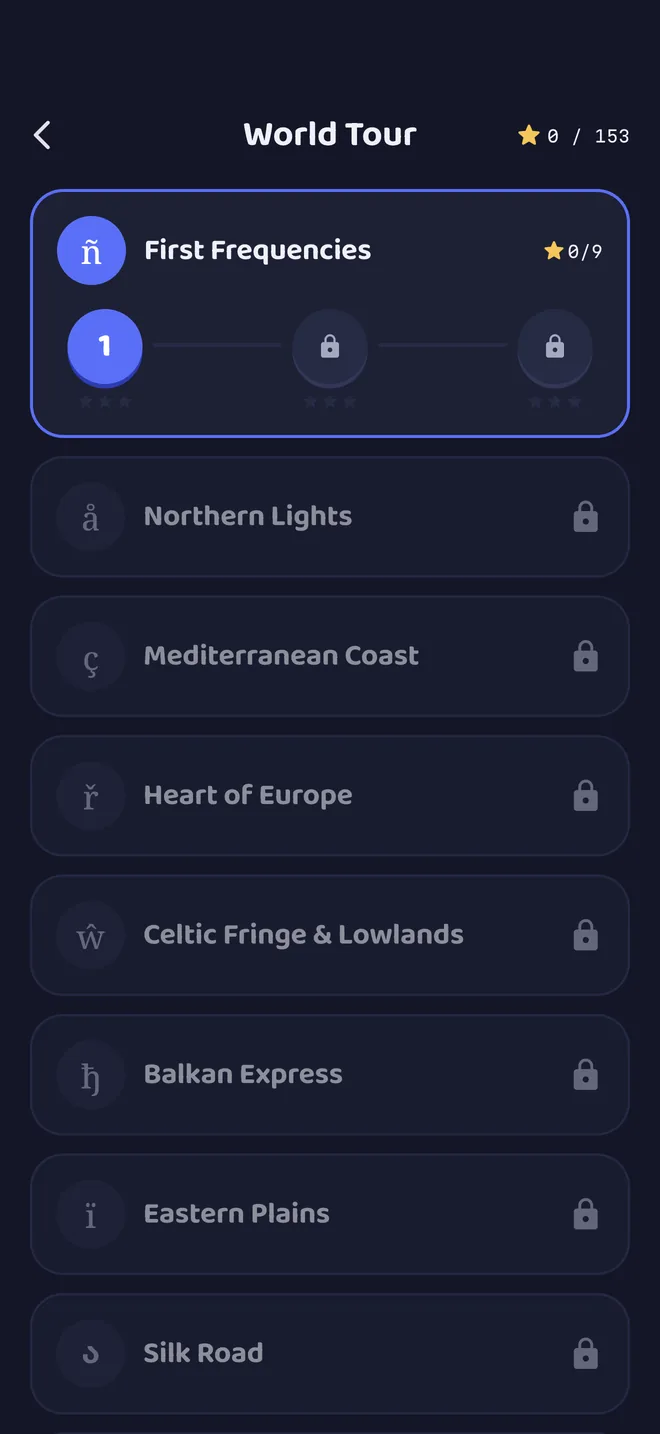
17 regions, from First Frequencies to the Silk Road and Pacific Drift. Earn stars at every stop.

Pro

Face-offs

Look-alike languages side by side, with the differences explained before you play.

Pro

Practice

Unlimited Ear and Eye rounds on Easy, Normal or Hard.

Free

Atlas

Every language you meet lands on your map, with field notes and the languages it is often confused with.

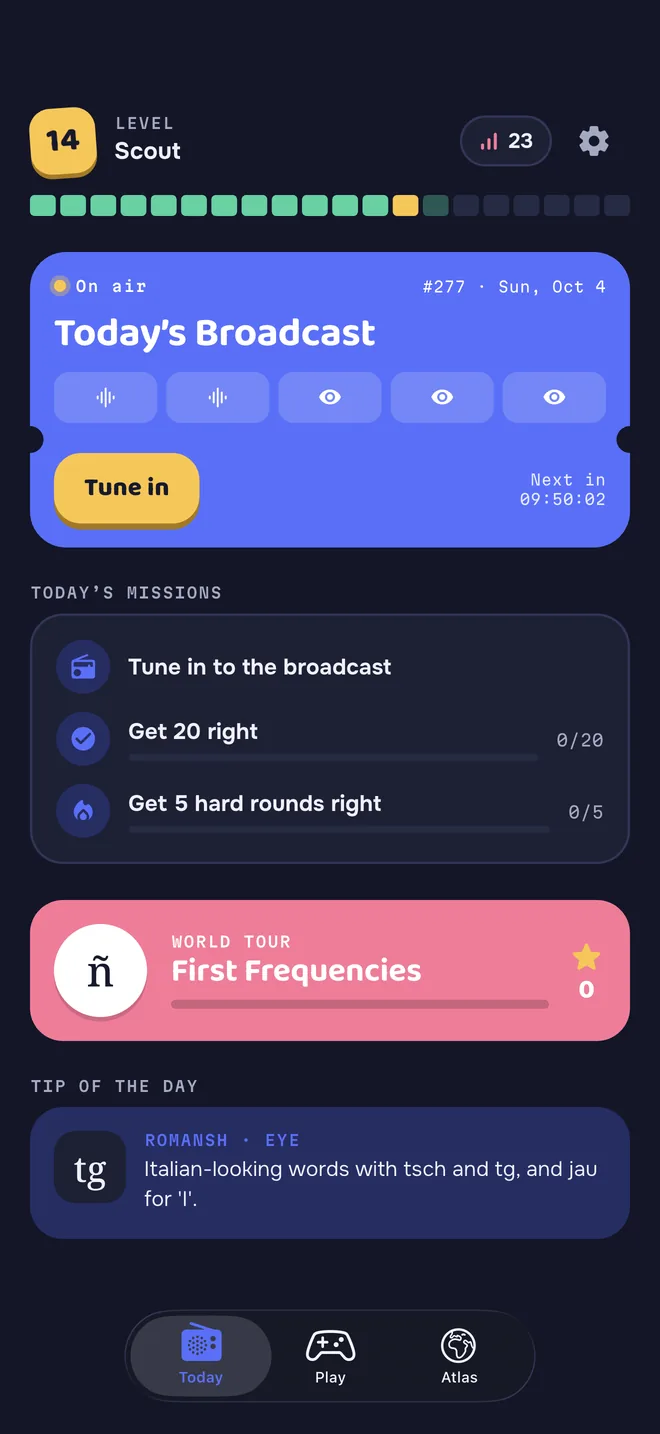
Today tab: the daily broadcast, today's missions, World Tour progress and tip of the day

Face-offs

Spanish or Portuguese?

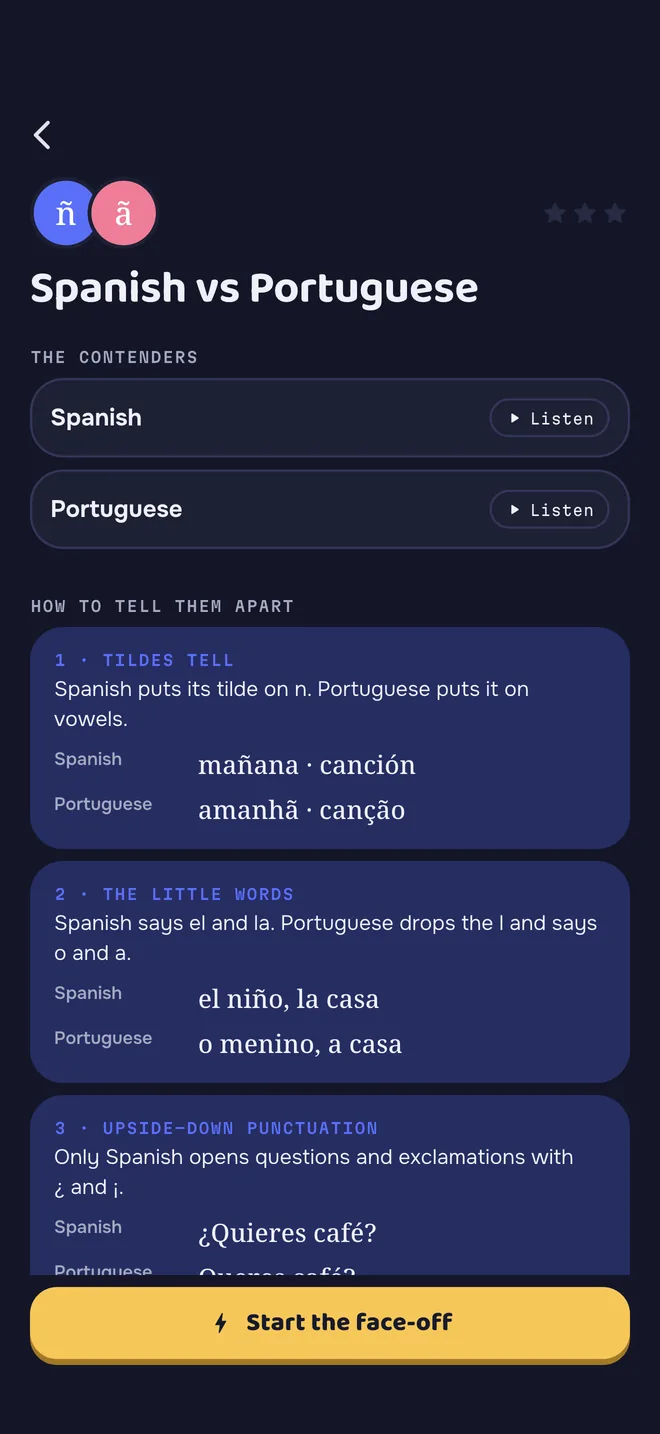
The hardest calls are between neighbours. 26 face-offs teach you how to tell them apart, with the tells side by side and real examples, then put you to the test.

  • Spanish vs Portuguese
  • Czech vs Slovak
  • American vs British
  • Thai vs Lao
  • Mandarin vs Cantonese
  • Swedish, Norwegian, Danish
  • Brazil vs Portugal
  • Zulu vs Xhosa
  • Finnish vs Estonian
  • Hawaiian, Māori, Samoan
  • +16 more
Spanish vs Portuguese face-off: how to tell them apart, with example words side by side

Collect them all

Fill your atlas

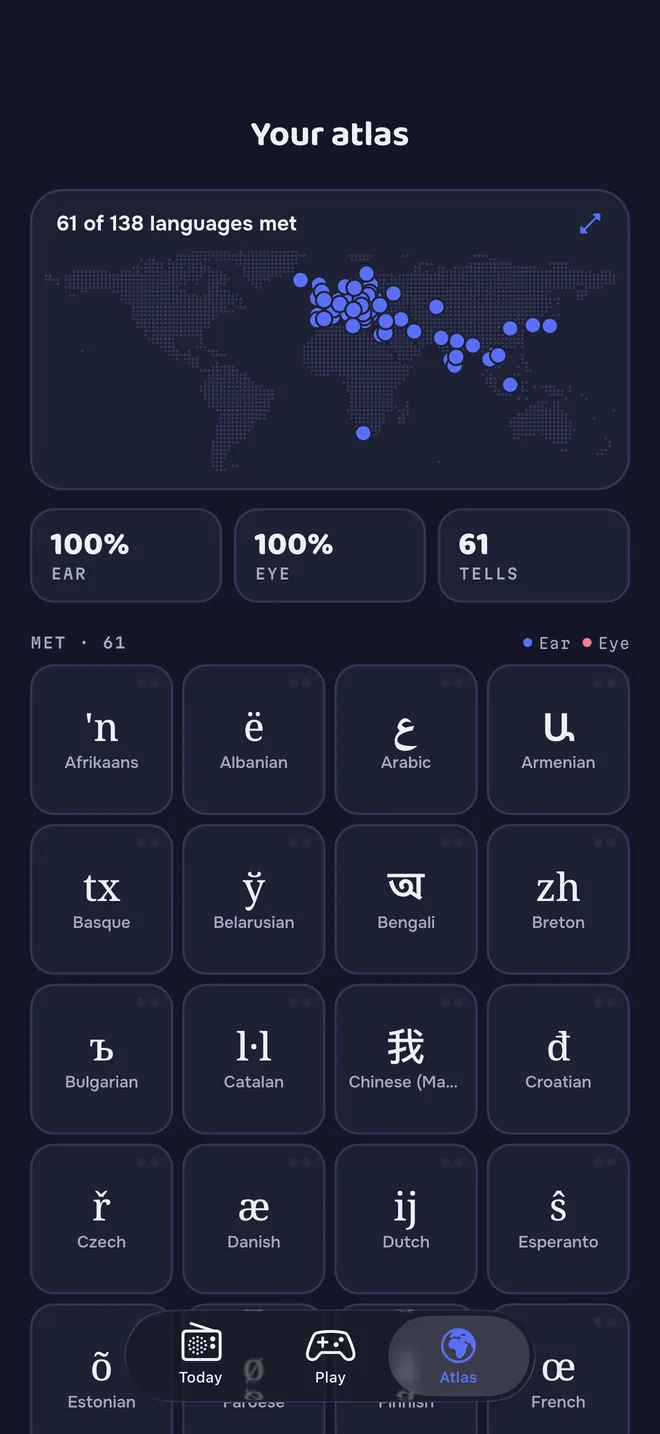
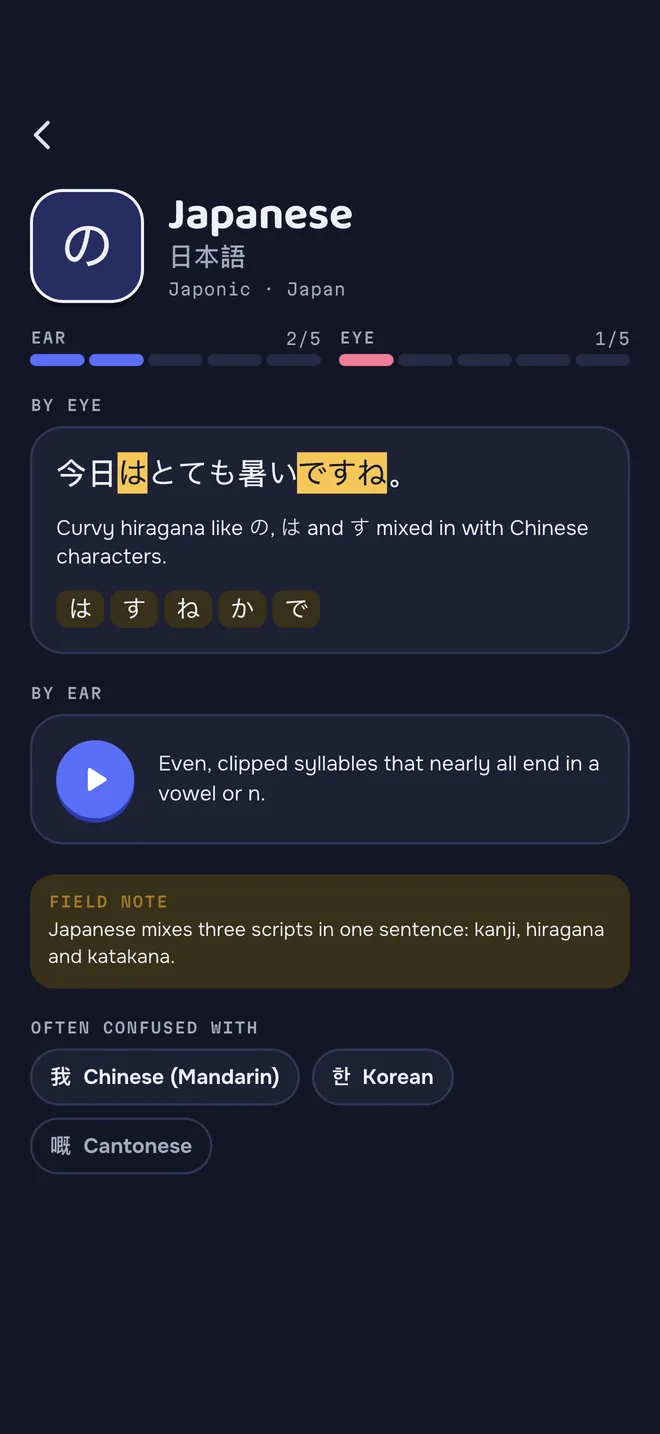
138 languages in 30 scripts, from Japanese and Arabic to Hawaiian, Yiddish and Cherokee. Every one has its own page with its Ear and Eye tells, a field note and the languages it is often confused with.

Earn XP, finish daily missions, unlock achievements and climb from Tourist to Linguist.

Atlas: 61 of 138 languages met on a world map, with a tile for each language's tell

Pricing

Free every day

Free

No account, no card

  • The daily broadcast, every day
  • Five Ear and Eye rounds
  • Your atlas, streak and XP
  • Share your score

Tells Pro

$24.99/year or $2.99/week, with a free trial for new subscribers

  • All 138 languages
  • Survival and the World Tour
  • All 26 face-offs
  • Unlimited Ear and Eye practice

US prices; local prices vary. Subscriptions renew automatically and can be cancelled in your App Store or Google Play account settings.

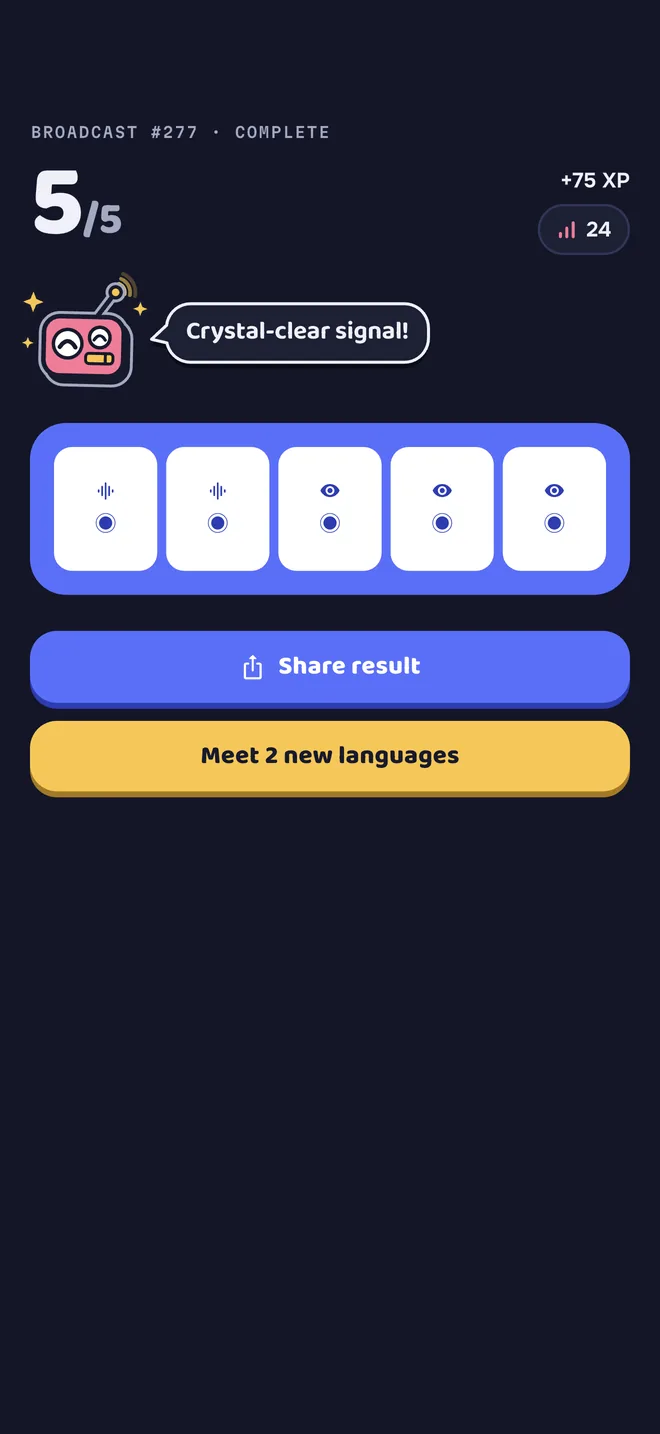
Broadcast results: 5 out of 5, plus 75 XP, with a share button that hides the answers

FAQ

Questions

What is Tells?

Tells is a language guessing game for iPhone, iPad and Android. You hear a few seconds of real speech or read a single line of text, name the language, and then see the tell: the letter, sound or pattern that gives that language away. After a week of daily rounds you start spotting languages on menus, street signs and in films.

What is a tell?

A tell is the giveaway feature of a language. ł means Polish. ő and ű mean Hungarian. Sentences ending in ። mean Amharic. Spanish opens questions with ¿, and Turkish has a dotless ı next to a dotted i. Every round in Tells ends by showing you the tell, so each answer teaches you something you can use on the next one.

How many languages are in Tells?

138 languages written in 30 scripts, from Japanese, Arabic and Hindi to Hawaiian, Yiddish, Cherokee and Inuktitut. 89 of them have Ear rounds with recordings of real native speakers; the rest are Eye rounds you identify from writing.

Are the voices real?

Yes. Ear rounds use recordings of native speakers from Google's FLEURS speech dataset (CC BY 4.0), not synthetic text-to-speech. Written samples are hand-written or come from the Tatoeba sentence collection (CC BY 2.0 FR).

Is Tells free?

The daily broadcast, five rounds a day, is free forever. Tells Pro unlocks all 138 languages, Survival, the World Tour, every face-off and unlimited practice for $2.99 per week or $24.99 per year in the US, with a free trial for new subscribers. Prices vary by country.

What are face-offs?

Face-offs put look-alike languages side by side and teach you how to tell them apart: Spanish vs Portuguese, Czech vs Slovak, Thai vs Lao, Mandarin vs Cantonese, Swedish, Norwegian and Danish, American vs British English and 20 more. Each one explains the differences with real examples before you play.

Does Tells work offline?

Yes. All clips and written samples ship with the app, so every round works without Wi-Fi or mobile data. There is no account and your progress stays on your device. Only the zoomable language map needs a connection, and a simple dot map is shown when you are offline.

Who is Tells for?

Anyone curious about the world: travellers, polyglots, language learners, geography and GeoGuessr fans, trivia players and people who just want to know what language that was on the train. No prior knowledge is needed; the World Tour starts with the most common languages and builds up.

Which devices does Tells run on?

iPhone and iPad with iOS 15 or later, and Android phones and tablets.

Tells mascot cheering

Today's broadcast is on air

Five rounds. Free every day. Can you name them all?

Coming soon to iPhone, iPad and Android